Weekly conversations. Participant voices. Podcasts from across the 80 days.
Live Zoom Conversations
Each Wednesday during the 80-day reading of Ulysses, participating readers joined live conversations with Joyce scholars, guests, writers, artists, and fellow readers from around the world.
Questions, observations, discoveries, and discussion were all part of the experience.
Intimate, optional, and shared as part of the reading.
Conversations took place each Wednesday, June 3rd – August 19th, 2026
11 AM California • 7 PM Dublin
Every conversation was recorded and shared as a podcast—so you can still listen, in your own time.
Season 5 Guest Conversations
Bonus episodes throughout the year will be posted here.
Professor of Literature and Book History at Loughborough University, author of Serial Encounters, and curator of Women and the Making of Joyce's Ulysses at the Harry Ransom Center.
By the way, if you're curious about a few things Clare mentioned…
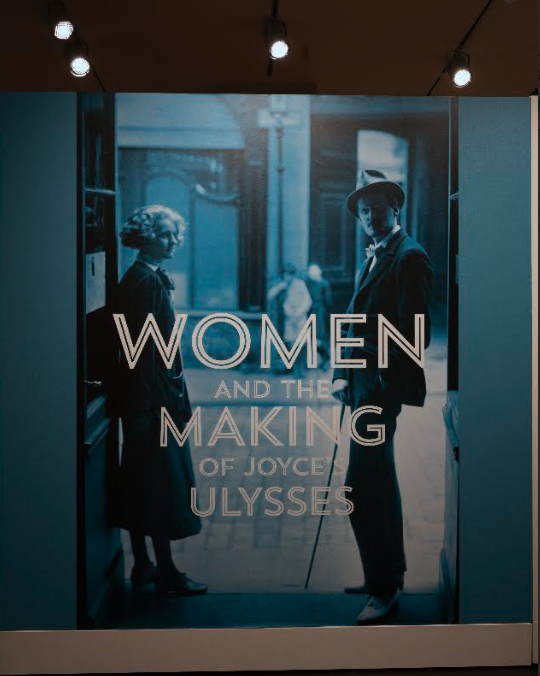
The exhibitionClare's slides came from Women and the Making of Joyce's Ulysses, the exhibition she curated at the Harry Ransom Center in Austin. The title wall sets the argument: a woman and Joyce in a doorway, and the claim that the book was made by the women around him.
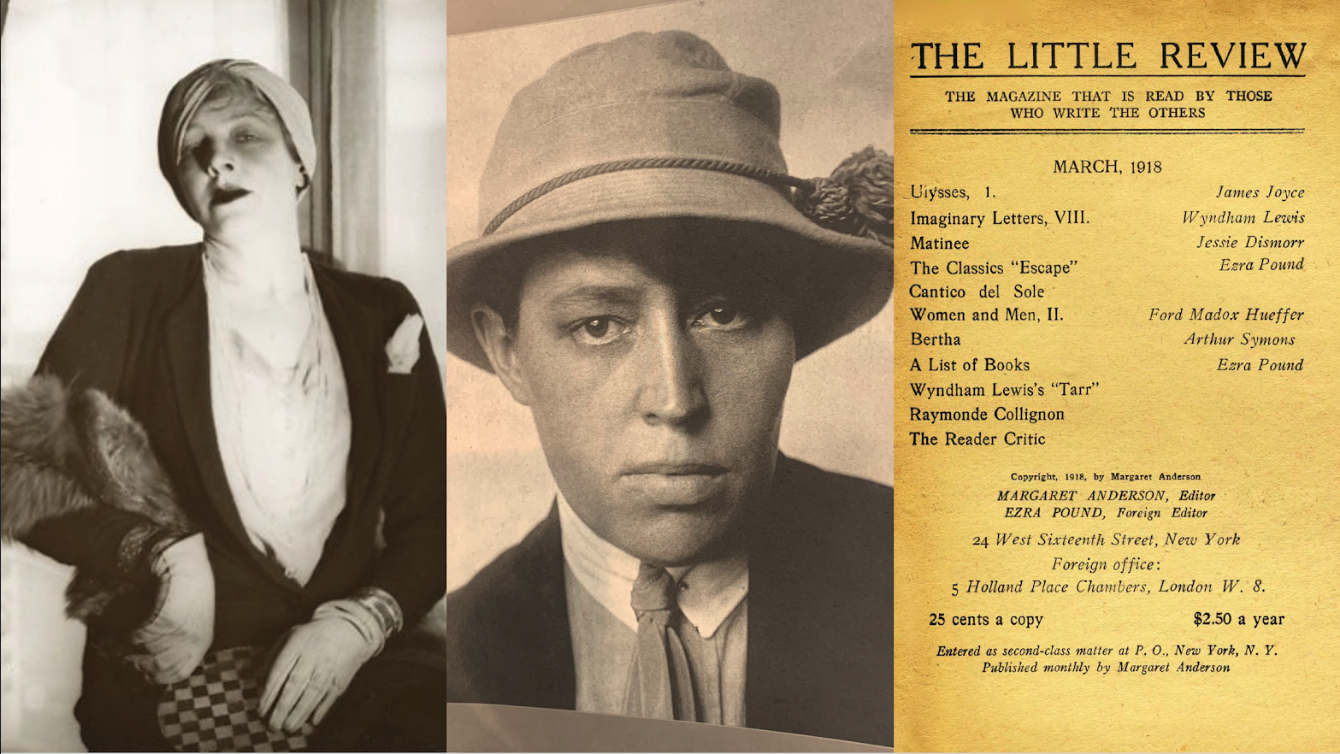
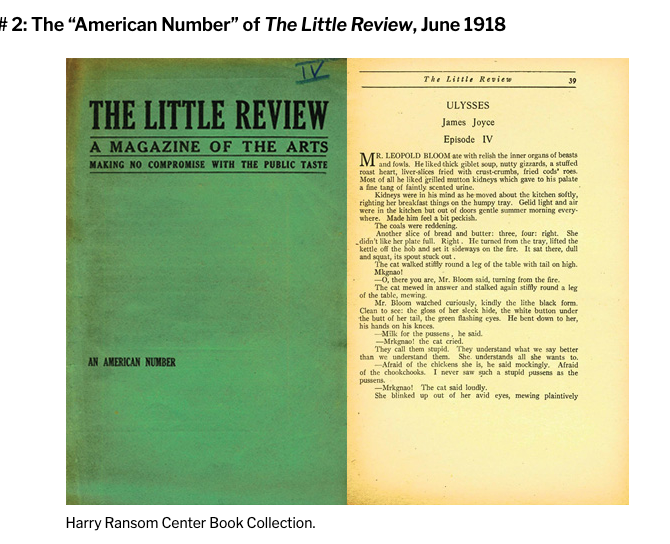
Margaret Anderson, Jane Heap, and The Little ReviewBefore there was a book there was a magazine. Anderson and Heap began serializing Ulysses in The Little Review in March 1918 and kept going until the courts stopped them. Here is the “American Number” of June 1918, open at Calypso — Bloom and the kidney and the cat, appearing in the world for the first time, in a magazine that made “no compromise with the public taste.” This is the subject of Clare's Serial Encounters.
The two editors, and the March 1918 contents page — Ulysses, 1, at the top of the list.
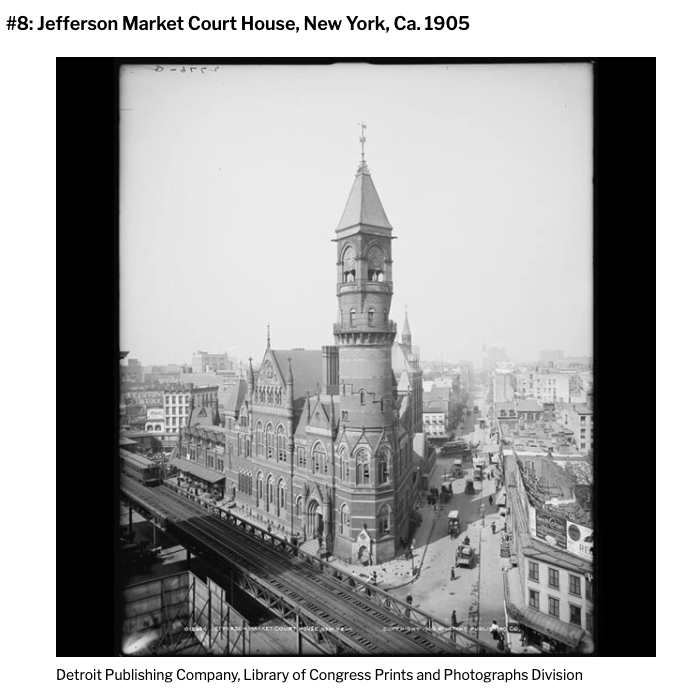
The courthouseThe serialization ended in a New York courtroom: Anderson and Heap were prosecuted over the Nausicaa episode, convicted, and fined, and Ulysses stopped appearing in the magazine. The case began at the Jefferson Market Court House in Greenwich Village.
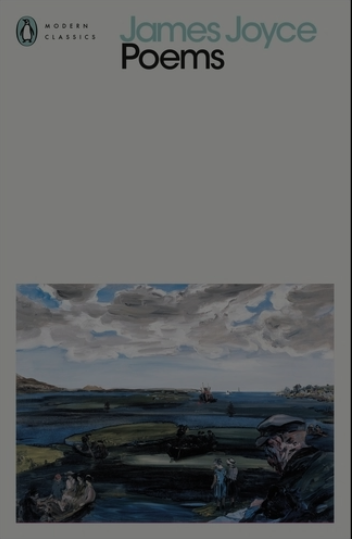
James Joyce — Poems (Penguin Classics)
All the poetry Joyce published in his lifetime — Chamber Music, Pomes Penyeach, the satires, and Ecce Puer. Edited by Andrew Gibson, with an introduction and notes by Clare. Published on Bloomsday, June 16, 2026.
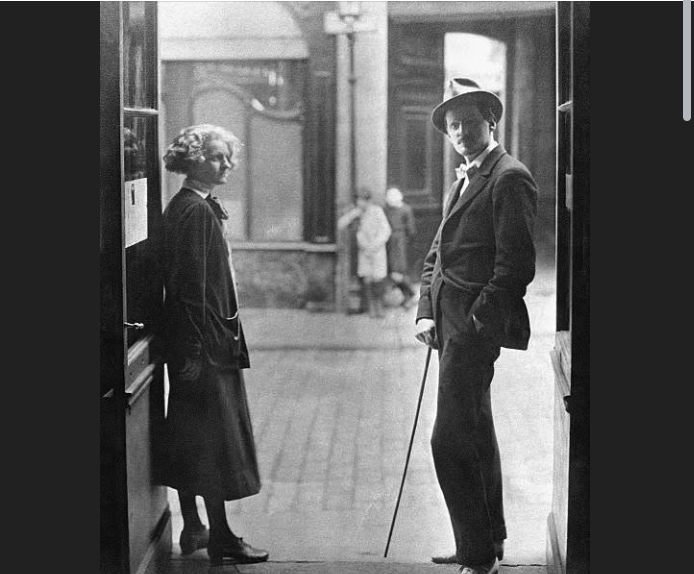
Sylvia Beach and Shakespeare and CompanyThe American bookseller whose Paris shop published Ulysses in 1922, when no one else would. Clare showed the well-known photograph of Beach and Joyce standing together in the shop doorway.
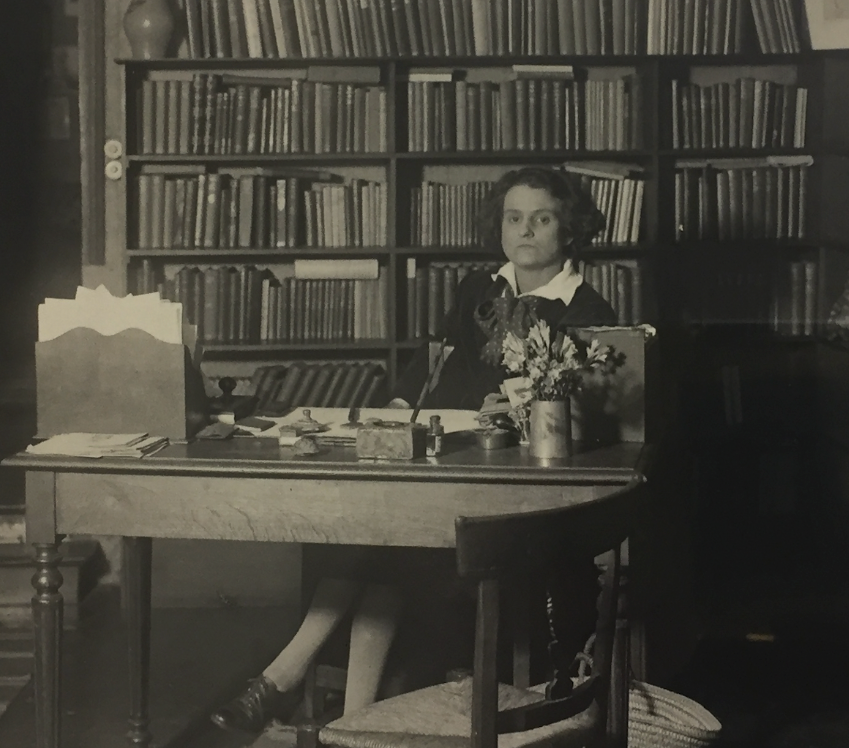
Beach at her desk in the shop.
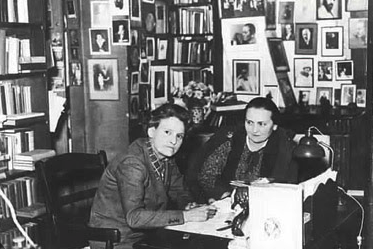
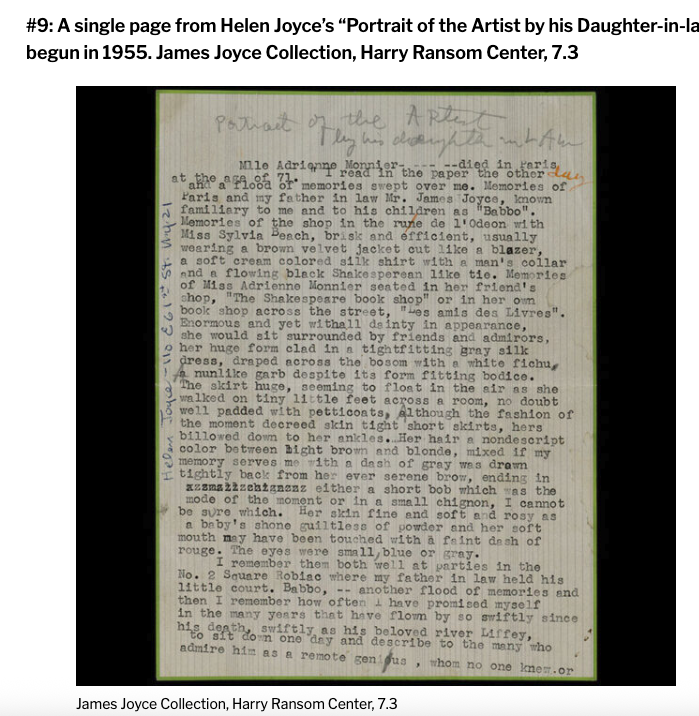
Sylvia Beach and Adrienne MonnierBeach's partner in life and in the trade, Monnier ran La Maison des Amis des Livres across the rue de l'Odéon. Together they made that corner of Paris the place where Ulysses could exist. Helen Joyce — Giorgio's wife — began a memoir of her father-in-law in 1955 and opened it with the news of Monnier's death: Beach “brisk and efficient, usually wearing a brown velvet jacket cut like a blazer,” Monnier “enormous and yet withal dainty in appearance.” Two women remembered as people, by someone who had stood in the room with them.
Sylvia Beach and Adrienne Monnier in the bookshop, rue de l'Odéon.
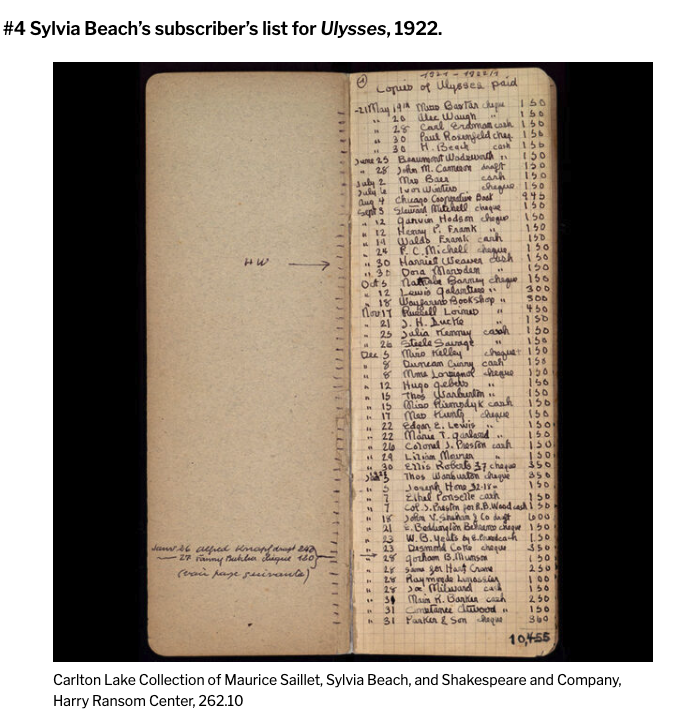
Beach's book of subscriptionsUlysses was paid for in advance, name by name. Beach kept the list in a small notebook — “Copies of Ulysses paid” — with the date, the subscriber, whether it came by cheque or cash, and the amount, ruled down to a total of 10,455 francs. Harriet Weaver is in there on 30 October, marked with an arrow. This is the reason the book exists at all.
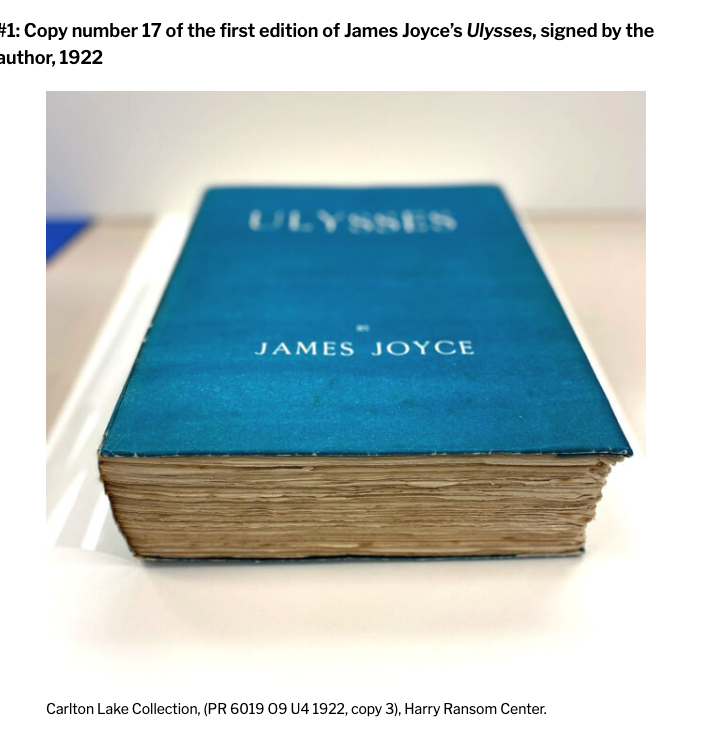
The book itself, 1922What all of it produced: copy number 17 of the first edition, in Beach's Greek blue wrappers, signed by Joyce. The pages have gone brown and wavy at the edges. It looks like something that has been read.
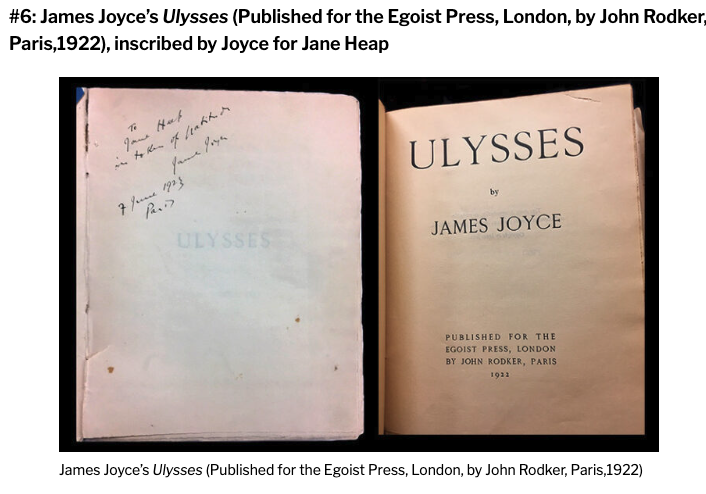
Joyce's copy for Jane HeapThe 1922 Egoist Press printing, inscribed by Joyce to Jane Heap in Paris in June 1923 — a thank-you, of a kind, to one of the two women who had gone to court for the book.
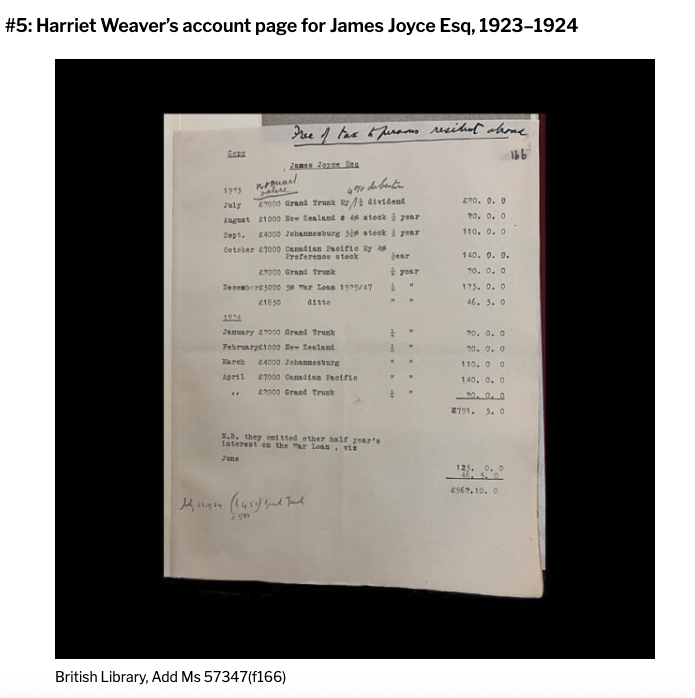
Harriet Shaw WeaverEditor of The Egoist and Joyce's most steadfast patron — she funded his writing for decades, at first anonymously, and became his literary executor. Without her, there is likely no Ulysses. Her accounts for “James Joyce Esq” are what patronage actually looks like: Grand Trunk Railway, New Zealand stock, Johannesburg, Canadian Pacific, War Loan — dividends from her own holdings, entered month by month through 1923 and 1924 and totalled at the foot of the page. She was quietly assigning her investments to him.
Harriet Weaver's account page for James Joyce Esq, 1923–1924. British Library, Add MS 57347 (f166).
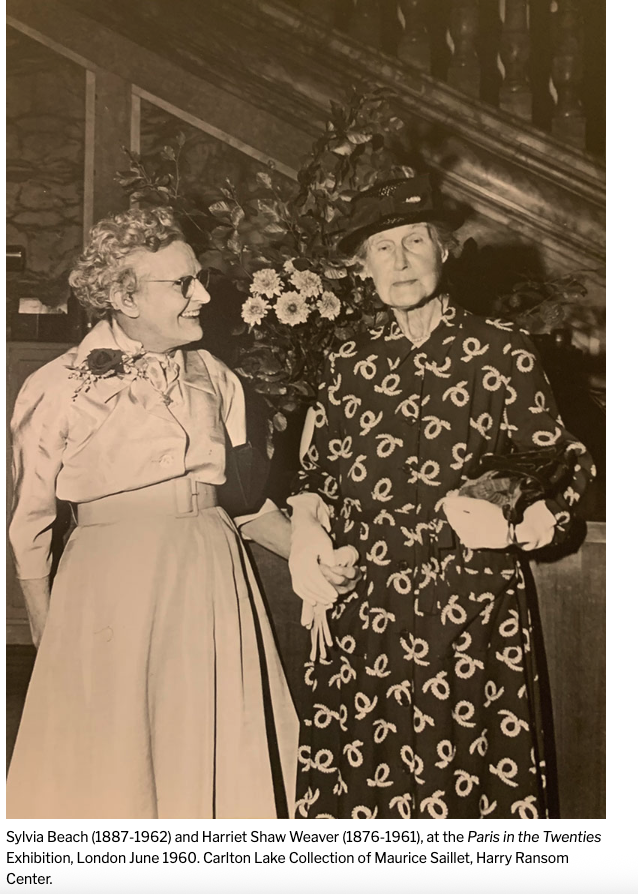
Beach and Weaver, London, 1960Almost forty years later, the publisher and the patron stand together at an exhibition called Paris in the Twenties — Beach seventy-three and laughing, Weaver eighty-four in a patterned coat and hat. Joyce had been dead nineteen years. They both had one year left. Clare's work on their letters is about this friendship.
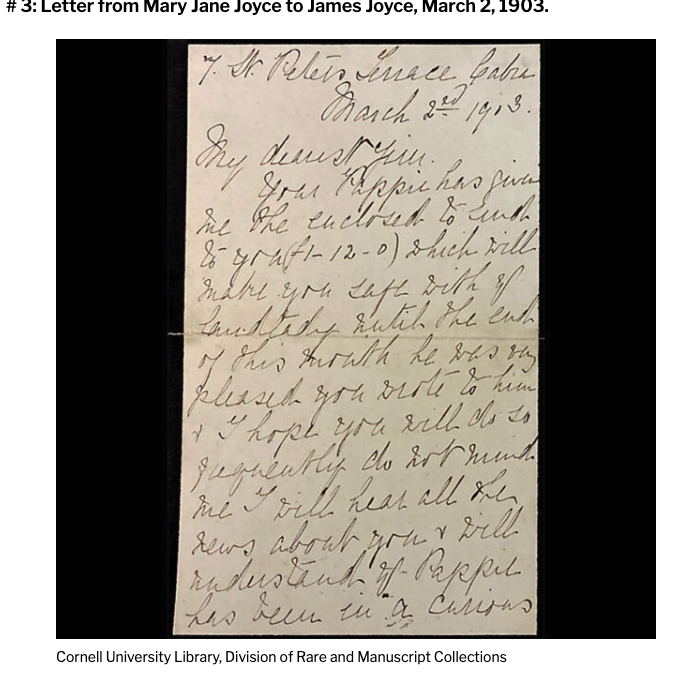
A letter from Joyce's motherMay Joyce wrote to her son in Paris on 2 March 1903, seven months before her death: My dearest Jim, Your Pappie has given me the enclosed to send to you (1-12-0) which will make you safe with St Lambert until the end of this month — money, and the hope that he will write home more often. This is the loss that opens Ulysses and shadows Stephen all through the day.
Cornell University Library, Division of Rare and Manuscript Collections.
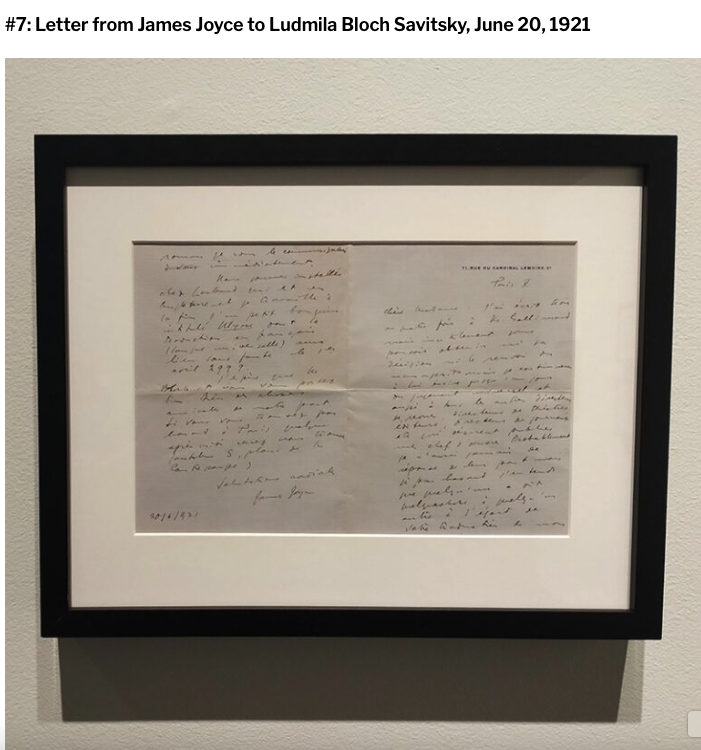
A letter in French, June 1921Joyce writing to Ludmila Bloch Savitsky, who had lent the family her Paris flat when they arrived in 1920 and who would go on to translate A Portrait into French. Framed on the exhibition wall — more of the practical kindness the book was built out of.
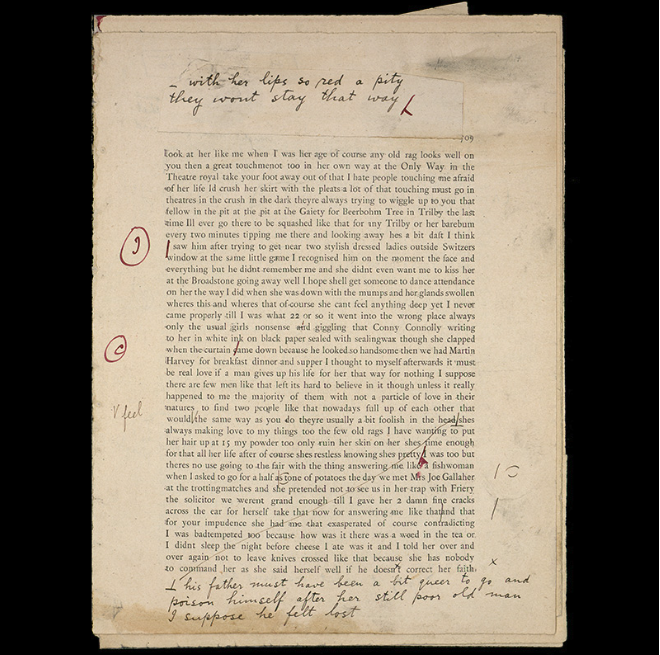
A placard for Penelope, with Joyce's additionsA printer's proof of Molly's monologue, with Joyce still writing in the margins — with her lips so red a pity they wont stay that way at the top, and at the foot of the page his father must have been a bit queer to go and poison himself after her still poor old man I suppose he felt lost. Molly thinking of Rudolph Bloom. The book was still growing at the press.
Page 709 of the final corrected page proofs of Ulysses (1922), with autograph additions by James Joyce. James Joyce Collection, Harry Ransom Center.
Clare on Ulysses at 100A short film from Loughborough University in which Clare introduces the novel — Bloom as a hero of the everyday, and why the 16th of June still draws people into the streets of Dublin.Watch now
Clare's own work, referred to in the talk
Serial Encounters: Ulysses and the Little Review (Oxford: Oxford University Press, 2019; paperback, 2022).
‘Finding Miss Weaver: James Joyce and the Patron of Ulysses’, in Nicola Wilson et al. (eds.), Edinburgh Companion to Women in Publishing, 1900–2000 (Edinburgh: Edinburgh University Press, 2024), 573–593.
‘Networks of Association and Intimacy: The Letters of Harriet Shaw Weaver to Sylvia Beach’, James Joyce Quarterly, 62 (Winter–Spring 2025), 71–110.
The images Clare shared come from Women and the Making of Joyce's Ulysses, the centenary exhibition she curated at the Harry Ransom Center, University of Texas at Austin, in 2022.
By the way, if you're curious about a few things Daniel mentioned…
Theodore Roosevelt — “The Ancient Irish Sagas” (1907)
T. S. Eliot — “Tradition and the Individual Talent” (1919)
R. F. Foster — Vivid Faces: The Revolutionary Generation in Ireland, 1890–1923
Claire Connolly — Irish Romanticism: A Literary History (2025)
Daniel Mulhall — Ulysses: A Reader's Odyssey
“Jots and tittles”An expression meaning the smallest details or minutiae. It comes from Matthew 5:18: a “jot” refers to the smallest letter or written stroke (from the Greek iota, associated with the Hebrew yod), while a “tittle” is a tiny stroke or mark used in writing. The phrase entered English through early Bible translations and came to mean attending to every last detail.
The United States v. UlyssesColin Murphy's play about the landmark 1933 court case that cleared the way for the publication of Ulysses in the United States. The play will be touring in 2027 — details will be posted on the Once Off Productions site later this year.
The United States v. Ulysses (radio version)The radio adaptation of Colin Murphy's play, produced by RTÉ Drama on OneListen now
Set at Random: The Book That Wouldn't Lie DownBy Declan DunneLearn more
Ulysses in NighttownMarjorie Barkentin's landmark 1958 stage adaptation of the “Circe” episodeLearn more
The Annotated UlyssesBy Don Gifford and Robert J. SeidmanLearn more
Annotations to James Joyce's UlyssesBy Sam SloteLearn more
The War of the WorldsThe 1938 radio adaptation by Orson WellesLearn more
The March of TimeThe dramatized radio news seriesLearn more
By the way, if you're curious about a few things Matthew mentioned…
Books, poems, places, people, images, and links mentioned by Matthew Campbell during our conversation.
LEGO National Library of DublinA remarkable LEGO recreation of Dublin's National Library, where Stephen Dedalus and the literary figures of Scylla and Charybdis gather. Matthew used this model to begin our conversation about the real people who found their way into Ulysses.
J. M. Synge's HouseMatthew shared the story of Oliver St. John Gogarty relieving himself against Synge's front door—one of the many anecdotes that brought Dublin's literary world vividly to life during our conversation.
W. B. Yeats — In the Seven Woods (1903)Matthew introduced Yeats's 1903 collection, including the poem "Baile and Aillinn," whose closing lines inspired Buck Mulligan's irreverent parody in Ulysses.
Along the way, Ulysses in 80 participants from around the world continue the conversation through shared podcast episodes and reflections.
Organic, casual, and often recorded in real time, these conversations emerge directly from the reading experience itself—exploring questions, frustrations, discoveries, favorite passages, editions, halfway thoughts, and the experience of reading Ulysses together over 80 days.
Episodes have included:
Why Read Ulysses?
What Edition Should I Read?
Halfway Through
…and conversations inspired by readers everywhere.
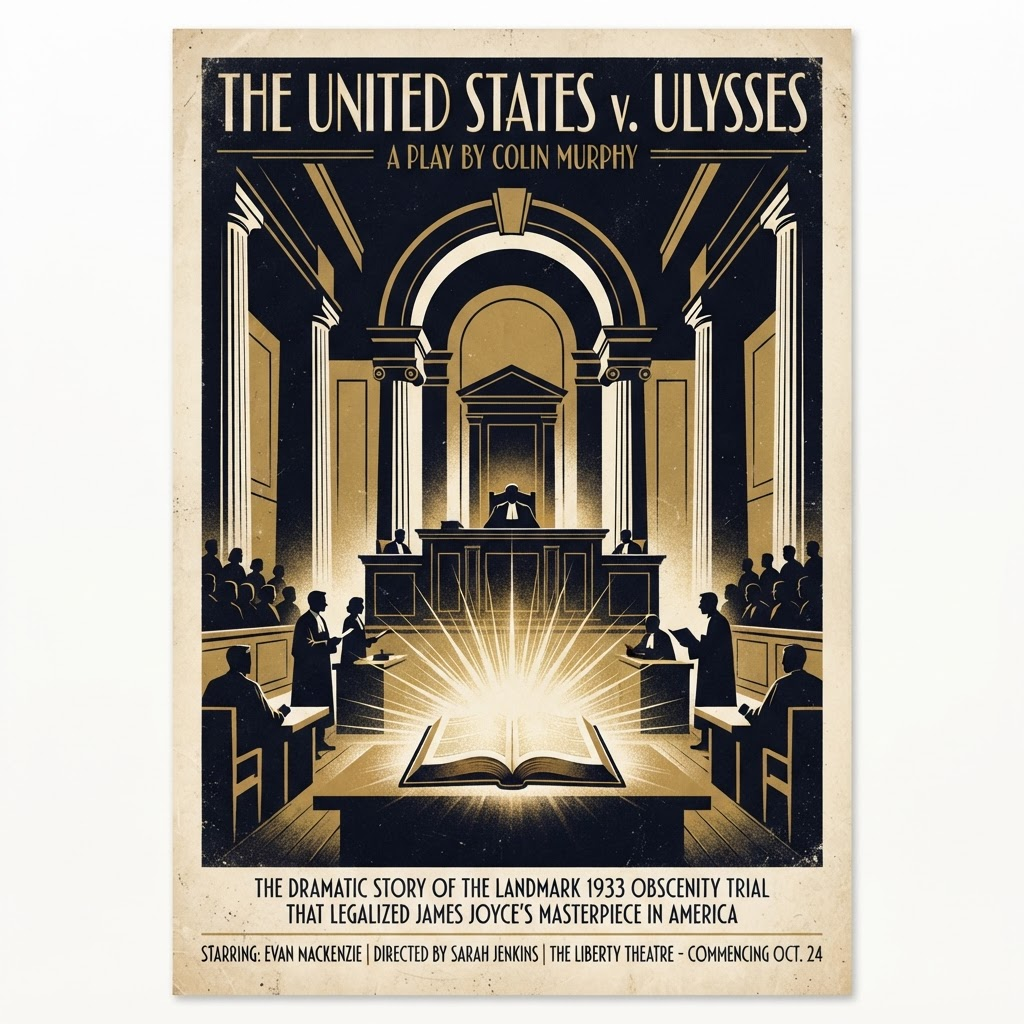 The United States v. UlyssesColin Murphy's play about the landmark 1933 court case that cleared the way for the publication of Ulysses in the United States. The play will be touring in 2027 — details will be posted on the Once Off Productions site later this year.
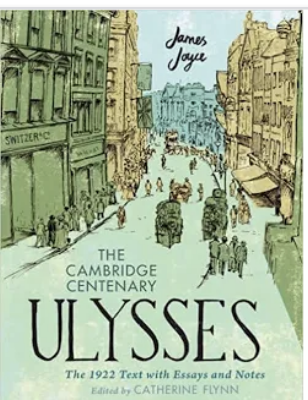 The Cambridge Centenary UlyssesThe 1922 Text with Essays and Notes, edited by Catherine Flynn
 LEGO National Library of DublinA remarkable LEGO recreation of Dublin's National Library, where Stephen Dedalus and the literary figures of Scylla and Charybdis gather. Matthew used this model to begin our conversation about the real people who found their way into Ulysses.
 J. M. Synge's HouseMatthew shared the story of Oliver St. John Gogarty relieving himself against Synge's front door—one of the many anecdotes that brought Dublin's literary world vividly to life during our conversation.
 W. B. Yeats — In the Seven Woods (1903)Matthew introduced Yeats's 1903 collection, including the poem "Baile and Aillinn," whose closing lines inspired Buck Mulligan's irreverent parody in Ulysses.
 George Russell (AE) — New Songs
 Dana
Dana James Joyce — Chamber Music